Advice
Laying out a low-maintenance garden: what it does and does not ask of you
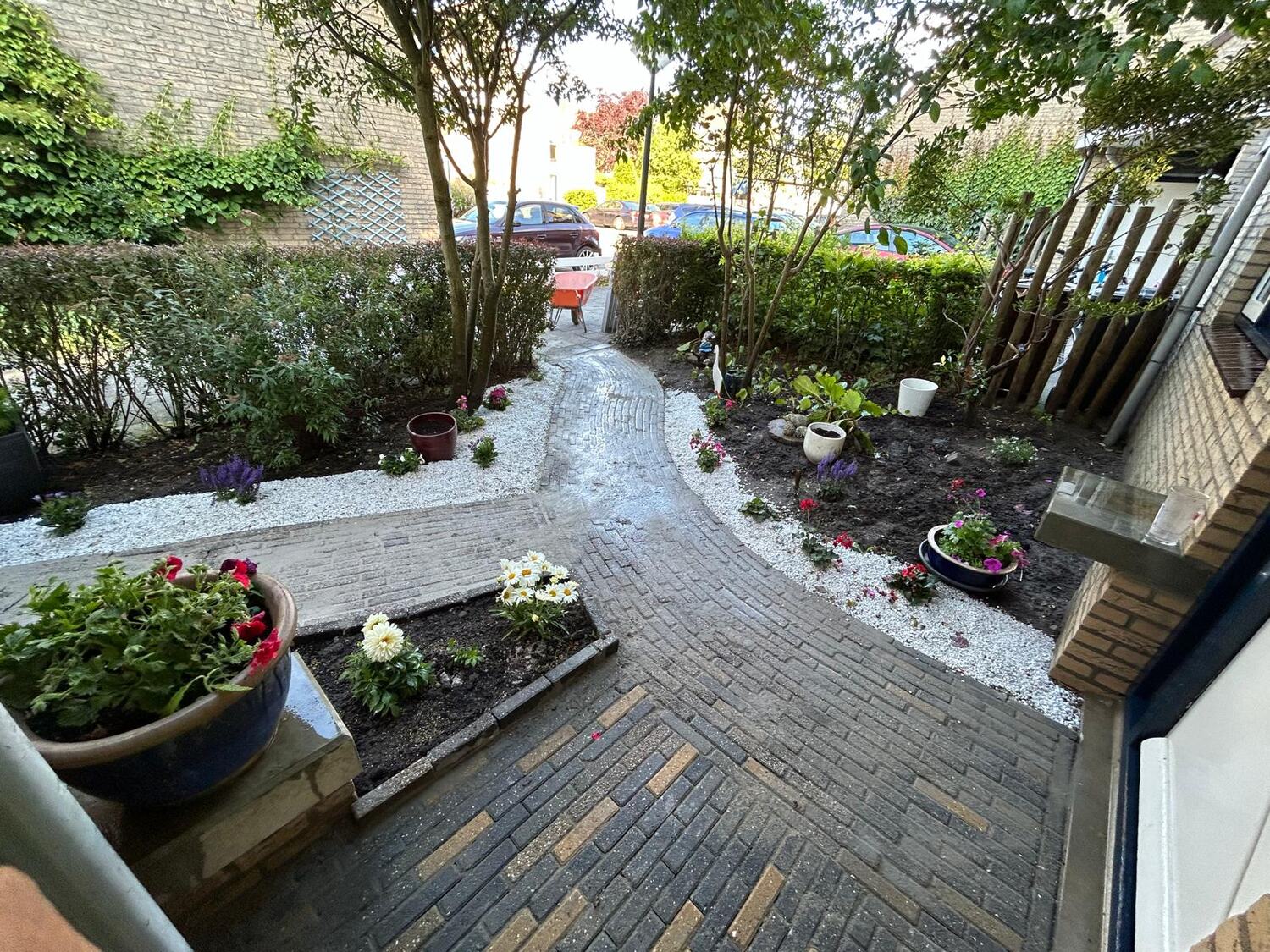
A low-maintenance garden exists, a garden with no maintenance does not. The work stays low if you take things in the right order: first see what the soil and the spot can take, then pick plants that will stay there, cover the ground and limit lawn and pots. Paving and gravel move the upkeep: from weeding to keeping joints clean and clearing leaves.
Updated 2026-10-13
You can lay out a low-maintenance garden. A garden with no maintenance does not exist. The figures below come from the Royal Horticultural Society, the British gardening charity. They are guidelines for gardens in general, not a Dutch standard. I spent seven years in agronomy. What I take from that most is that a garden costs little work when the plant suits the spot.
Where the upkeep sits
A garden asks for a handful of things. Weeding. Watering. Pruning. Mowing the lawn. And keeping paving, joints and gravel clean. A low-maintenance garden is one where you have designed out one or two of those, not all five. If you think that through first, you lay the garden out differently than if you let it happen.
Start with the spot
This is the choice with the biggest return and it costs nothing. Choose plants that suit your soil and your spot. A plant in the wrong place has to be watered, fed and covered, and in the end replaced.
That means knowing what you have. Clay holds water and nutrients but is heavy and dries slowly. Sand warms up fast and holds little. Peat works like a sponge. Take a handful of moist soil and squeeze: if it falls apart, it is sand. If you can roll a sausage, there is clay or loam in it. Also look at how long the sun stays on a spot. A north wall and a south-facing corner are two different gardens. How I work that out for each corner of a garden is described under a planting plan for your garden.
Choose plants that stay
Hardy shrubs and evergreens are long-lived plants you do not replace every year. Perennials come back. Annuals and seasonal bedding cost work again every year.
Two things help. Choose fewer kinds in larger groups, because that looks less busy and is easier to look after than one of everything. And choose plants that cover the ground. Ground cover such as periwinkle, bigroot geranium (Geranium macrorrhizum), barrenwort and lady’s mantle knits together, so weeds get little light. In shade, hostas do the same. Fill gaps in a border with plants like these.
Watch the flip side. Not every ground cover stays where you put it. Creeping Soleirolia spreads quickly from loose pieces of stem. When you choose, always ask whether a plant spreads.
Cover the ground
Bare soil fills up, with weeds or with plants. A mulch layer prevents the first. Mulch blocks the light that weed seed needs and reduces evaporation, so you weed and water less.
The numbers: at least 5 centimetres, preferably 7.5 centimetres for biodegradable material. Lay it on moist, weed-free soil in spring or autumn. Keep it away from the trunks of trees and shrubs, because mulch piled against a trunk can make it soft and prone to disease. Gravel in too thin a layer gets mixed into the soil and gives weeds room. If a border is full of weeds, you smother them with a layer of 10 to 20 centimetres of organic material. For stubborn perennial weeds, put cardboard underneath first.
Lawn, paving and artificial grass
A lawn takes a lot of work: mowing, trimming edges, feeding, watering. In a small garden without children, big borders and a paved area ask less than a small lawn. If you keep grass, make it easy to mow, with a fixed stone edge the mower can run over and no awkward corners.
A garden full of paving is not the answer. Weeds grow in the joints, leaves stay put and rainwater cannot soak into the ground anywhere. If you pave part of the garden and plant the rest, rainwater soaks into the ground instead of running to the drain. Gravel with weed membrane underneath needs raking now and then and the leaves taken off.
Artificial grass takes away the mowing and feeding. It gets hot in the sun, the soil life underneath has a hard time and artificial grass has to be kept clear of leaves too. In a small spot it can work.
Water smartly
Put plants with the same water needs together, so you water per corner and not per plant. Big pots dry out more slowly than small ones, so choose few and large. A drip hose in the border saves carrying the watering can.
The upkeep that stays
Even the best garden asks for attention. Pruning stays, for hedges and shrubs that need it. Clearing leaves stays. In the first year or two new plants need more water and more weeding, until the border fills in. A bit of wildness belongs to it: a garden where a fallen leaf may stay is easier to keep up than one that always has to look sharp.
What to do with this
If you do not know which plants can take your corner, look at planting plan. I choose plants that keep growing in your soil and your spot, matched to the sun and the time you want to spend. You get the upkeep advice with it.
Sources
- Royal Horticultural Society, 10 ways to have a great-looking, low maintenance garden
- Royal Horticultural Society, Mulch
- Royal Horticultural Society, Non-chemical weed control
- Royal Horticultural Society, Mind your own business (Soleirolia)
Frequently asked questions
Is there such a thing as a garden with no maintenance?
No. Plants grow, weeds seed and leaves fall. What does exist is a garden where that comes down to a few set moments a year instead of part of every weekend. You make that difference when you lay the garden out, not afterwards.
Which plants are low-maintenance?
Plants that suit your soil and your amount of sun, because then you do not have to keep correcting. Lavender is an example: it does well in free-draining soil and sulks in wet ground. Beyond that, hardy shrubs, evergreens and perennials ask the least, because you do not have to plant them again every year.
Which ground-cover plants keep weeds down?
Periwinkle, bigroot geranium (Geranium macrorrhizum), barrenwort and lady's mantle are often named, and hostas in shade. They cover the ground, so weeds get little light. Choose with care: some ground-cover plants spread and seed themselves, and then you have an extra job.
How thick should a mulch layer be to stop weeds?
At least 5 centimetres, preferably 7.5 centimetres for biodegradable material such as bark or wood chips. Lay it on moist, weeded soil in spring or autumn, and keep it away from trunks and stems. Gravel in too thin a layer gets mixed into the soil and gives weeds room.
Is a paved or gravel garden low-maintenance?
Lower, not free. Weeds grow in the joints, leaves stay on the gravel and rainwater has to go somewhere. If you pave part of the garden and plant the rest, rainwater soaks into the ground instead of running to the drain.
Is artificial grass low-maintenance?
You do not have to mow or feed it. Against that, it gets hot in full sun, the soil life underneath has a hard time, and leaves have to be removed from artificial grass too. In a small spot where grass will not grow anyway it can be a good choice. In a large garden a smaller lawn with wide borders is often smarter.
How much upkeep does a low-maintenance garden need?
That depends on the garden, so I do not name a number of hours. Do expect the first seasons to need more attention. New plants need water and the ground between them has not filled in yet. That work drops as the planting fills in.
Have this done for you
Would you rather have this work carried out than read about it? Here is what I do exactly.