Services
Handyman in Nieuwegein
That list of small jobs you keep putting off. Get it ready and I work through it in one visit.
I work through your list of small jobs and maintenance in Nieuwegein in one visit, from a sticking door to a dripping tap.
What I do for you
Everyone knows the list: a sticking door, a dripping tap, a shelf hanging off the wall, sealant coming loose. On their own they sit there, together they cost you a weekend. I work through that list in one visit.
Handy about one tradesman for everything: you do not have to call someone different for every little job. And if I spot something small that is loose, I usually take care of it right away.
Good as regular maintenance or as a one-off when too much has piled up. Call or message me what is going on and I come by.
I work in Nieuwegein and Utrecht, and for a bigger job further out into the region.
How I go about it
- Small repairs throughout the house
- Adjusting sticking doors and windows
- Repairing taps and sanitary ware
- Renewing sealant and grout
- Mounting, assembling and adjusting
- Regular maintenance by appointment
- Replacing and adjusting door furniture and locks
- Repairing skirting boards, thresholds and trim
- Assembling furniture and flat-pack kits
Almost every house has a list like that. Usually not on paper, but in your head: the bedroom door you have to shove shut with your hip, the cupboard in the hall that has hung crooked since you moved in, the sealant behind the basin that has gone black, the skirting board that was never put back after the new floor went in. One by one they are half-hour jobs. Together they are a weekend that never comes. Below is why that list stays where it is, what is usually on it, and how you get it off the table in one visit.
Why that list stays where it is
There are three reasons, and laziness is not one of them.
The first is the barrier to calling. You do not call a tradesman out for one sticking door. That feels odd, and you rightly suspect the call-out costs more than the work itself. So you wait until there is more. Only “more” never has a moment. Something else always gets added, so the putting off has no natural end.
The second is tools. A lot of small jobs are not a question of being able to, but of having. A door that catches you adjust in five minutes if you have the right hex key in your hand. Without that key you are still improvising an hour later, or you drive to the hardware store for a tool you then never use again.
The third is the most annoying: the job that grows halfway through. You take off an old sealant joint and the tile underneath turns out to be loose. You unscrew a shelf from the wall and the plaster comes with it. At that moment you are further from home than when you started. People are afraid of that, and not without reason. On a list I simply count on a few of the points having something under them, and plan time for it instead of being caught out halfway.
What is usually on a list like that
Roughly it falls into four corners.
Doors, windows and hardware. Doors that catch or no longer pull shut, hinges that have dropped, a window that draughts because the rubber has gone hard, locks that run stiff, and the threshold or skirting board that was never finished after a new floor. This is the most common work on the list and usually the quickest too.
Water and sanitary ware. A dripping tap, a shower hose leaking at the connection, a loose toilet seat, a drain running slow, sealant that has gone black or come away. Sealant is the job that gets put off longest and does the most damage, because water runs into the wall behind a loose joint. If it goes further than a joint and tiling or pipework has to be involved, it falls under bathrooms and sanitary ware.
Hanging and mounting. Cupboards, shelves, TV brackets, mirrors, curtain rails, a flat-pack that has been sitting in the box for months. It rarely goes wrong on the hanging itself, and almost always on what is behind it. Plasterboard, aerated concrete and an old lime wall each want a different kind of plug, and you only see that once you drill. If it becomes bespoke, so a cupboard in an alcove or under a sloped ceiling, it is no longer a loose job but custom carpentry.
Outside and the rest. A fence that has gone out of line, a gate dragging over the paving, a gutter full of leaves, an outside tap, a garden bench falling apart. Outside work is the part of the list that gets worse quickest, because everything that is loose outside only gets looser with rain and frost.
How I work through a list in one visit
The difference between a list that is done in one go and a list you have to plan twice for is almost entirely in the preparation.
Send me the list as it is, with a photo per point. No neat description needed, just: bedroom door catches, kitchen tap drips, cupboard in the hall hangs crooked. From the photos I can see which hardware, which tap and what kind of wall it is, and that decides what I bring. That is the whole secret of one visit: the materials have to be in the van before I am standing at your door, because the trip to the hardware store is the most expensive minute of the day.
On the day itself I start with the points that could have something behind them, not with the easiest ones. If a sealant joint turns out to be tiling after all, I want to know that at nine in the morning and not at four in the afternoon. The quick points then move along on their own, because they cost no decisions.
And I say it plainly if a point on your list is not worth paying me for. You can hang a small shelf in a straight plasterboard wall yourself. I am not going to quietly take that on to pad the bill.
Handyman or builder: who do you call?
The practical distinction is not the size of the job. It is whether the jobs force each other into an order, and whether anything changes in the structure or the layout.
You call a handyman for loose points that sit next to each other. They have no order between them, they do not depend on one another, and if one drops off the rest is still finished. That work you plan per visit and settle per visit.
You call a builder as soon as the order starts to dictate the work. On a renovation of a room or a whole floor the tiling cannot come before the pipework, the floor cannot come before the plastering, and finishing makes no sense while dust is still being made. Then you are not buying hours but a schedule. The same goes as soon as a wall has to come out, something structural changes or a permit comes into view. That is the moment to call the bigger outfit straight away, not halfway, because undoing a half-finished job costs more than starting it properly.
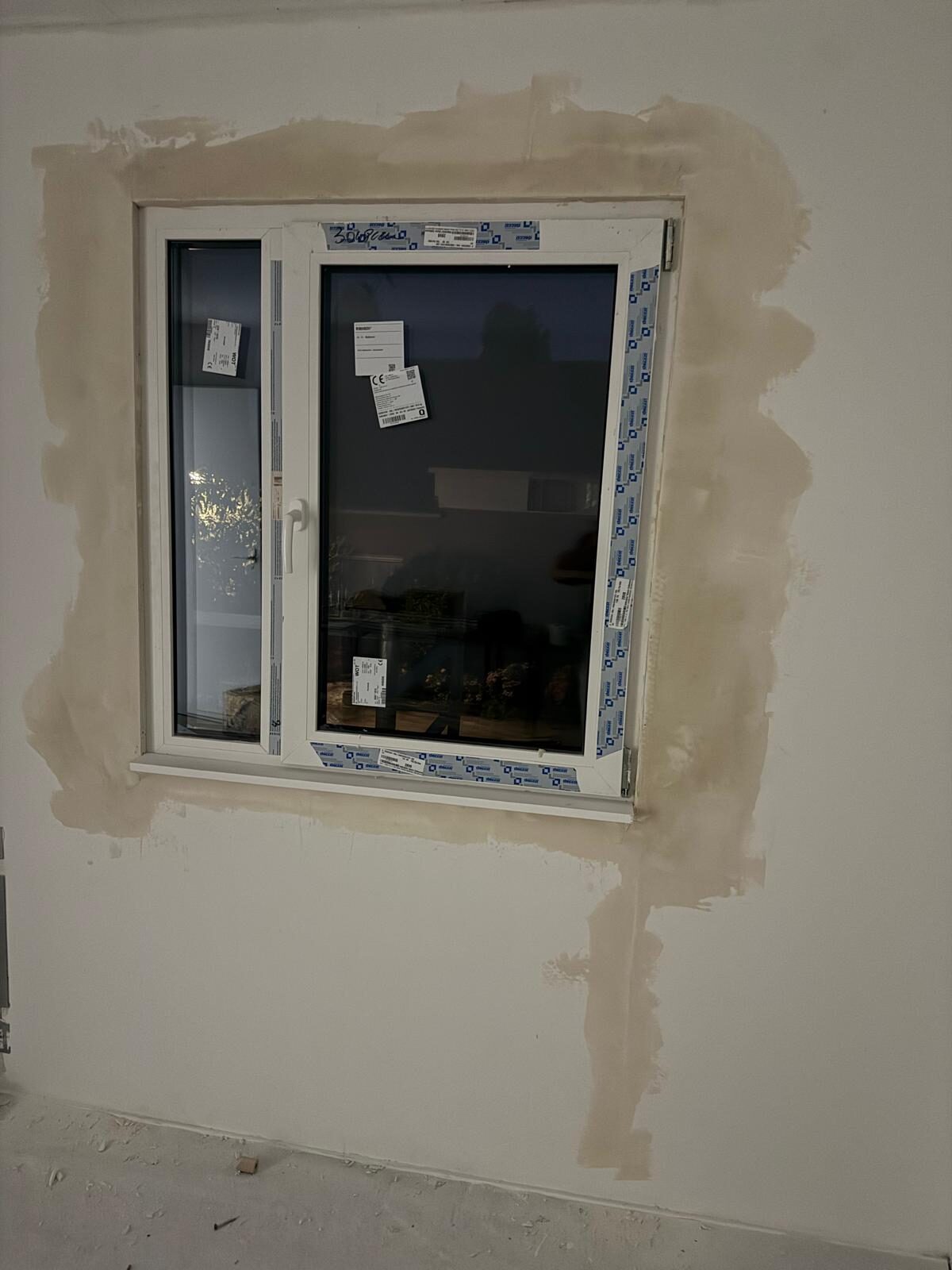
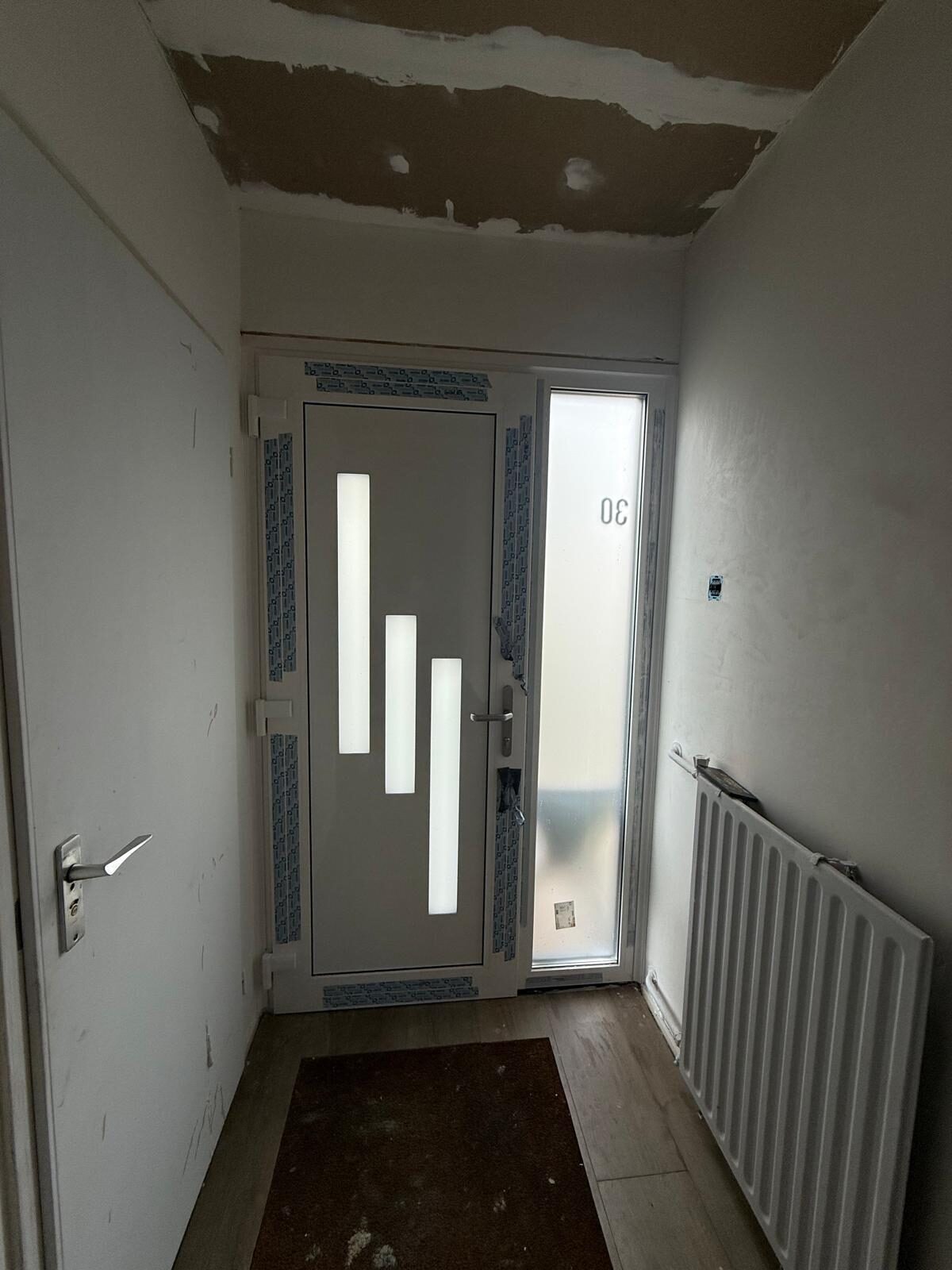
The awkward part is that most work falls in the grey area in between. Fitting new window frames and closing up the plastering around them is too much for a single handyman day and too little for a builder with a crew. The same goes for replacing a front door and finishing the hallway afterwards. Because I do the work myself and do not farm it out, a job like that does not have to fit in either box. So you do not have to make that split yourself before you call.
Looking for a carpenter for one job?
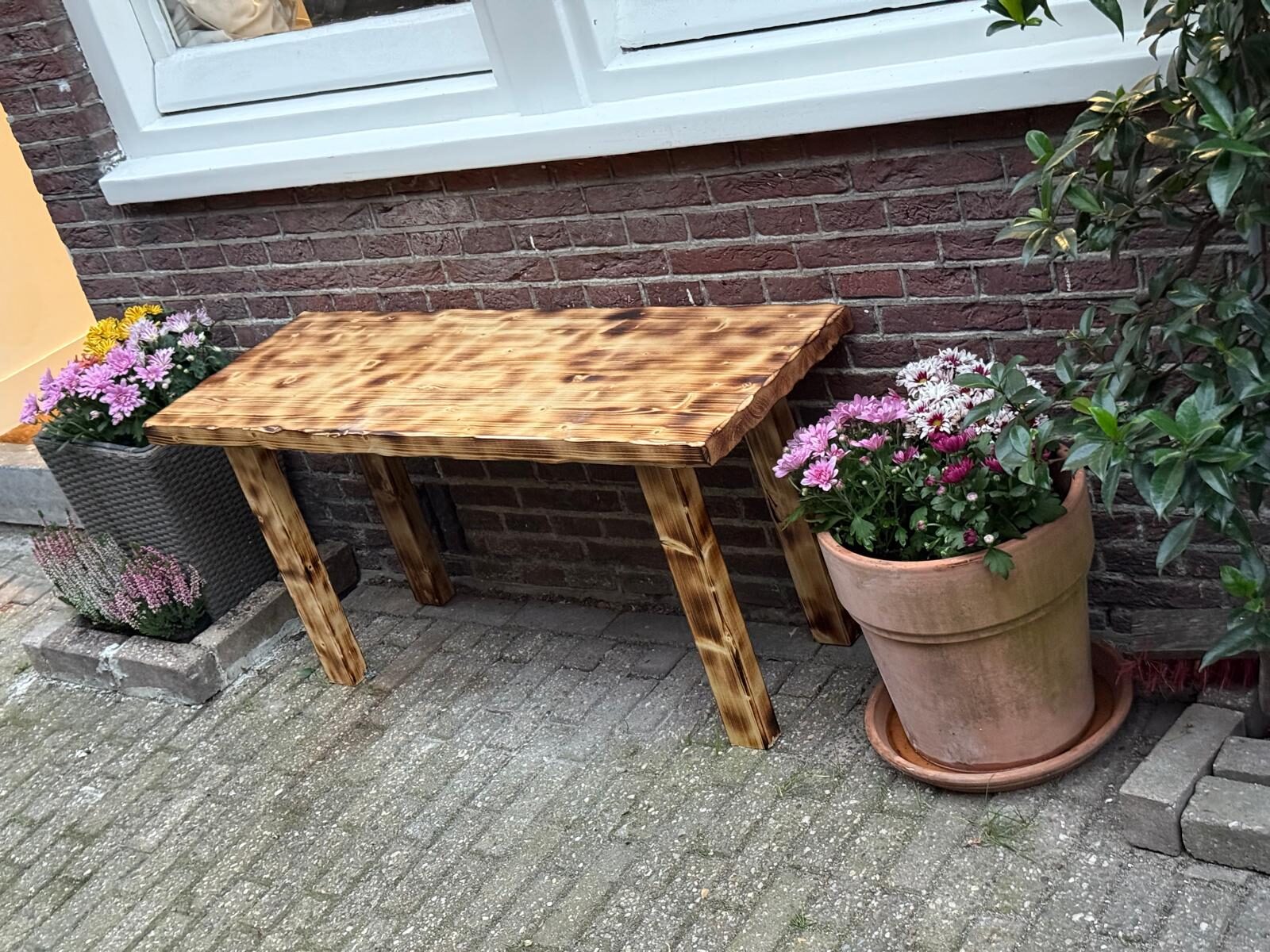
That is possible. A lot of people are looking for a carpenter for exactly one thing: hanging a door, setting a frame, repairing decking, or making something out of wood you cannot buy ready made anywhere, like an outdoor table in charred wood. For a single carpentry job I do look at the travel time. An hour of driving there and back for two hours of work makes it needlessly expensive for you, and I would rather say that up front than afterwards on the invoice. Just say where you are and what it is, and you will hear quickly whether it fits.
When you are better off calling someone else
Not everything belongs with a handyman, and that is not modesty but safety.
Work on the gas pipe and changes in the meter cupboard belong with a certified installer. A certification is required for that, and the requirement is not there for nothing.
A leak that is running right now is an emergency and not a list. Turn the water off at the stopcock and call someone who can come the same day.
And in older houses: if you come across a board and you are not sure what it is, do not drill into it and do not saw into it. Have it looked at first. That costs you a day of patience and saves you a problem you can be dealing with for months.
One-off or regular maintenance
Most people start with a catch-up. Everything that has been left, gone in one go, and after that the house is up to date again. If it fills up more often with you, for instance with a rented property or an owners’ association where complaints from residents pile up, a fixed round per season is cheaper. Small faults you catch early stay small. A loose gutter, a sealant joint or a hinge starting to drop costs a quarter of an hour now and half a day in two years.
I work mainly in Nieuwegein and for a list I also drive to Utrecht and the places around it. Get your list ready, send it over with a few photos, and you will hear from me what fits in one visit and what is better done separately.
What sets the price
With small work the price is rarely in the job itself. Setting a door, replacing a tap or hanging a shelf takes little time once I am standing in front of it. What drives the bill is everything around it: the drive there and back, working out which hardware or which tap it is, and the trip to the hardware store if that was not clear beforehand. That is exactly why a list gets cheaper per job the more there is on it. The same drive and the same preparation are then spread over eight points instead of one. The second thing that moves the price is uncertainty. With a sealant joint or a skirting board I only know what it is once the old one is off. I do not pad the estimate with a margin you end up paying anyway, but say up front which points on your list have an open end, and put it to you as soon as I see it.
What it comes down to
- How many points are on your list, and whether they are close together in the same house
- Whether it is a one-off catch-up or recurring maintenance by appointment
- The travel time, because on half a day of work driving there and back counts heavily
- Whether I bring the materials or you already have them in the house
- Whether something has to be taken out, stripped and carted off
- The height the work is at, and whether steps or scaffolding are needed
- Whether the work is in an occupied room, where things have to be covered up first
- How much uncertainty is in it, so whether we only know what is going on once it is opened up
What is included
- Going through your list up front, so we know what realistically fits in one visit
- Small fixings, like screws, plugs, sealant and bits of hardware
- Tools, including the special one you are not going to buy for a single job
- Covering the floor and the furniture where I work
- Small things I come across along the way that take a couple of minutes
- The honest answer about which point on your list you are better off doing yourself
- Clearing up and walking the work through with you before I leave
What comes on top
- Bigger materials, like a door, a tap, tiles, timber or paint
- Work that needs a certified installer, like the gas pipe and the meter cupboard
- Carting off large amounts of rubble or waste
- Testing suspect boards or materials in older houses
- Follow-up work that only turns out to be needed once something is opened up, which I put to you first
- Structural work that comes with a calculation
- Working outside my normal hours, unless we agree that up front
Send a few photos of the situation and say briefly what you want. Then you hear from me what it will cost in your case, itemised and with no strings attached.
Also in these towns
I work out of Nieuwegein and come to the whole region. These are the towns with a page of their own.
Frequently asked questions
What does a handyman cost?
That depends on how much is on your list. Several small jobs in one visit is cheaper than having me come three times. Call or message me briefly with what is going on and you get an indication right away.
Can I have several small jobs done at once?
Yes, that is exactly what works well. Get the list ready, like a sticking door, a dripping tap and a shelf to hang, and I work through it in one visit.
Do you do maintenance for an owners' association or a landlord?
Yes, that is possible. For an owners' association (VvE) or a landlord it works the same as for a resident, only I set out more clearly up front what is covered and what is not. The person reporting the fault and the person paying are not the same, and that is where arguments start afterwards otherwise.
What is the difference between calling a handyman and calling a builder?
Not the size of the job, but whether the jobs force each other into an order. Loose points that sit next to each other and do not depend on one another are handyman work: you plan those per visit. As soon as the tiling has to wait for the pipework and the finishing for the plastering, you are no longer buying hours but a schedule, and then it belongs to a renovation. I do both, so you do not have to make that split yourself before you call.
I am looking for a carpenter for one job, do you do that too?
Yes. Hanging a door, setting a frame, repairing decking, or making something out of wood you cannot buy ready made anywhere. For a single carpentry job I do look at the travel time, because an hour of driving there and back for two hours of work makes it needlessly expensive for you. I say that up front, not afterwards.
What if a small job turns out bigger than it looked?
That happens, especially with sealant, skirting boards and anything fixed to an old wall. I stop and put it to you first, what I see and what it costs extra, before I carry on. That is why on a day like that I start with the points that could have something behind them and not with the easiest ones: then you know in the morning and not at four in the afternoon.
Do you buy the materials, or do I?
Small fixings like screws, plugs, sealant and bits of hardware I bring with me. Bigger items, so a door, a tap, paint or timber, you buy yourself or you let me order, whichever you prefer. If you already have something in the house, say so, then I do not buy it twice.
Do you also work as a handyman outside Nieuwegein?
Nieuwegein is my base, so that is where I am at your door quickest. For a list I also drive to Utrecht, IJsselstein and the places around them. For a single job further away the travel time weighs heavier than the work itself, so just say where you are and you will hear whether it is worth it.
Featured work
The proof is in and around the house.
What customers say about this work
“Dido neatly replaced two rotten door frames, and also took care of a few small extra things right away, without charging more for it. Great service!”
Translated from Dutch
“It was a pleasant collaboration. (Edited on 2 Nov 2023)”
Translated from Dutch
“I am really happy with how Dido carried out the work. I had a leak and a mould problem at my kitchen sink. He replaced the tap and the basin and parts of the plumbing. The result turned out really nicely. Dido knows his trade very well and is very solution-minded. I will definitely hire him again for other jobs.”
Translated from Dutch
Tell me briefly what is going on
Three short steps. I look at it and call you back to talk it through.
1/3
Sent
Thanks, I have got it
I am on the tools myself, so it can take a few hours before I reply. If you are in a hurry, feel free to call.
Call me: 06 27 74 57 05Want this job done?
Tell me briefly what is going on. I talk the approach through with you and give you a price you can build on.
Need this too?
I do more than just this. Feel free to combine jobs in one visit.
- RenovationOne room, one floor or the whole house. One point of contact from start to finish.View this service
- Commercial & hospitalityRestaurants, bars and commercial spaces. Every day you are shut costs you money, so I plan the work around that.View this service
- Carpentry & fittingFurniture, dressing rooms, fitted wardrobes and assembly. Built to measure so it fits exactly where it has to.View this service
- Bathroom & sanitaryA complete new bathroom, or just the tap, shower or toilet. From strip-out to the last bead of sealant.View this service
- Floors & tilesFloors and tiling laid tight, from living room to hallway. Straight, level and finished neatly.View this service
- Garden & landscapingLayout, paving, trees and planting. With 7 years of agronomy (the science of soil and crops) I know the ground and the plants that grow in it.View this service
- Facade claddingNew exterior facade cladding in wood, composite, plastic or brick slips, on a batten frame that lets the wall breathe.View this service
- Extensions and annexesExtra room without moving house, built on site from the foundation to the skirting board.View this service
- RoofingRoof renovation, roof extensions and dormers out of Nieuwegein. Roofing as building work by one tradesman, not a roofing firm.View this service