Advice
Putting up a fence: where do the costs sit?
A fence looks like a row of boards between two posts, but the figure at the bottom of the quote is set by what you do not see: the type of panel, the posts, what goes into the ground, the ground itself, the number of corners and end points, taking away and disposing of what stands there now, and whether a gate has to go in. Below is that build-up item by item, plus what you need to settle with your neighbours before you have anyone round to measure up.
Updated 2026-09-02
A fence looks like the most straightforward job in the garden. Posts in, panels between, done. Yet quotes for exactly the same metres come out far apart, and that is rarely down to the boards. The difference sits in the posts, in what goes into the ground under them, in what stands there now and has to go, and in the spot where your garden is not level. Below is what the price is made up of, so you can see for yourself why two figures differ. How I carry that work out is on garden and landscaping work.
What the price is made up of
The panels themselves
Pressure-treated spruce or pine is the lightest to buy and the heaviest to look after. It moves, it warps and every so often it wants treating. Hardwood costs more to buy and is easier to maintain, and it stays straight for longer. Composite sits above that on purchase and below it on upkeep: cleaning and not much else. It still fades over the first period and it is heavier, which you see again in the posts and the foundation underneath. Wire with planting is the lightest on materials, but you buy waiting time with it, because a green wall is not a wall for the first few years. Timber outdoors behaves the same way as on facade cladding: what you are mainly choosing today is how much work you have with it later.
The posts
Concrete posts are the sturdiest and the most maintenance-free, and they set the look the most strongly, because you see them. Timber posts look quieter and are lighter, but the point where timber goes into the ground is always the weak spot. Metal posts, galvanised or coated, sit in between and you often see them with composite and with taller panels. With heavier panels a light post is not a saving but work put off.
What goes into the ground
This is the item you will see nothing of afterwards and the one the lifespan hangs on. Posts can be set in concrete footings, in postcrete, or with a ground anchor. What you need depends on the weight of the panel, the height and the ground itself. A fence that stands crooked after the first storm is hardly ever crooked because of the boards.
Length, height and the number of corners
Counting metres is the easiest sum and the worst way to compare. Every corner, every end point and every join onto a wall, a shed or an existing fence takes more time than a straight metre in the middle. Height works through in two directions at once: more panel means more material, but also more wind load, and so heavier posts and a stronger foundation. If your garden slopes, the fence has to be stepped, and that is where the hours go.
The ground itself
Sand digs differently from clay, and both differ from a garden where rubble or an old foundation once disappeared. Tree roots along the boundary cause the same problem. If all the material has to come through a side passage or through the house to the back, every wheelbarrow counts in the hours. And before anyone digs, you want to know where the cables and pipes run. A pipe you hit is the dearest way to set a post.
Taking out the old fence
What stands there now has to go, and that is more work than it looks. Unscrewing the panels is quick. The time sits in the old footings or buried posts, and in the disposal, because treated timber does not belong with ordinary building waste. Have that item put on your quote separately, then you know for certain it is in there.
A gate in it
A gate is not a stretch of fence with hinges on it. It moves, and that changes everything: a heavier post on the hanging side, founded deeper and more solidly, plus ironmongery, a lock and the adjusting so it still shuts after a wet winter. If you want something that differs from a standard size, it becomes bespoke carpentry and it goes per piece.
What people misjudge
The price per metre is the first trap. The fixed items in this work, setting out the line, getting materials in and waste out, the corners and the end posts, do not scale with the length. So a short fence with three corners comes out higher per metre than a long straight one.
The second is the maintenance. Today’s cheapest fence is hardly ever the cheapest over time. Count in what you keep putting into it, or let it fall deliberately under odd jobs and maintenance that I come and do later.
The third is the garden around it. There is digging, so grass, planting or paving gets churned up, and putting that right often sits outside the quote. No hidden costs, but costs all the same.
Height on the boundary, and the conversation with the neighbours
This is the question behind the question, and the answer costs you no money but it does cost a conversation. How high a screen may be depends on where it stands. On the street side and in the front garden something stricter applies than behind the house, and your council can put requirements on top of that through the planning scheme or its design rules. I deliberately give no measurements here, because they differ per situation and they shift over time. What applies to your address comes from the Omgevingsloket and from your council. Those have the last word, this piece does not, so look at the date above this article as well.
Separate from that is neighbour law. A fence that stands exactly on the boundary belongs to both of you, so you decide together on the height, the material and the upkeep. If you put it entirely on your own ground, you decide alone, but you give up a strip of garden and in practice you move the boundary everybody sees.
So settle three things before I come to measure up. Know where the boundary really runs, and do not go by the old fence, because it stands next to it more often than on it. Agree who pays what. And choose together which side gets the good face, because otherwise that question turns up on the day of fitting anyway. More of this kind of weighing-up is on the advice articles.
What to ask when you compare quotes
Is taking away and disposing of the old fence in there, including the old footings? Which post type has been priced and how are the posts founded? Are the corners, the end posts and the join onto the wall counted in? What happens if the ground turns out worse than expected? Is the gate in there with ironmongery and a lock? Who puts the garden right after the digging? And is there anywhere that says what is not in it? Two figures far apart are usually not a difference in price but a difference in what is being done.
Before there is a figure on paper
I come and look, set out the line and judge the ground, the differences in level and how the material gets round the back. On that visit we go through the panel type, the posts and the gate, because those are the dials you can turn. After that I put it on paper item by item, including the places where the uncertainty sits. I put the fence up myself, the same as the rest of the work in the garden. If you want to start the conversation, send me a message.
Featured work
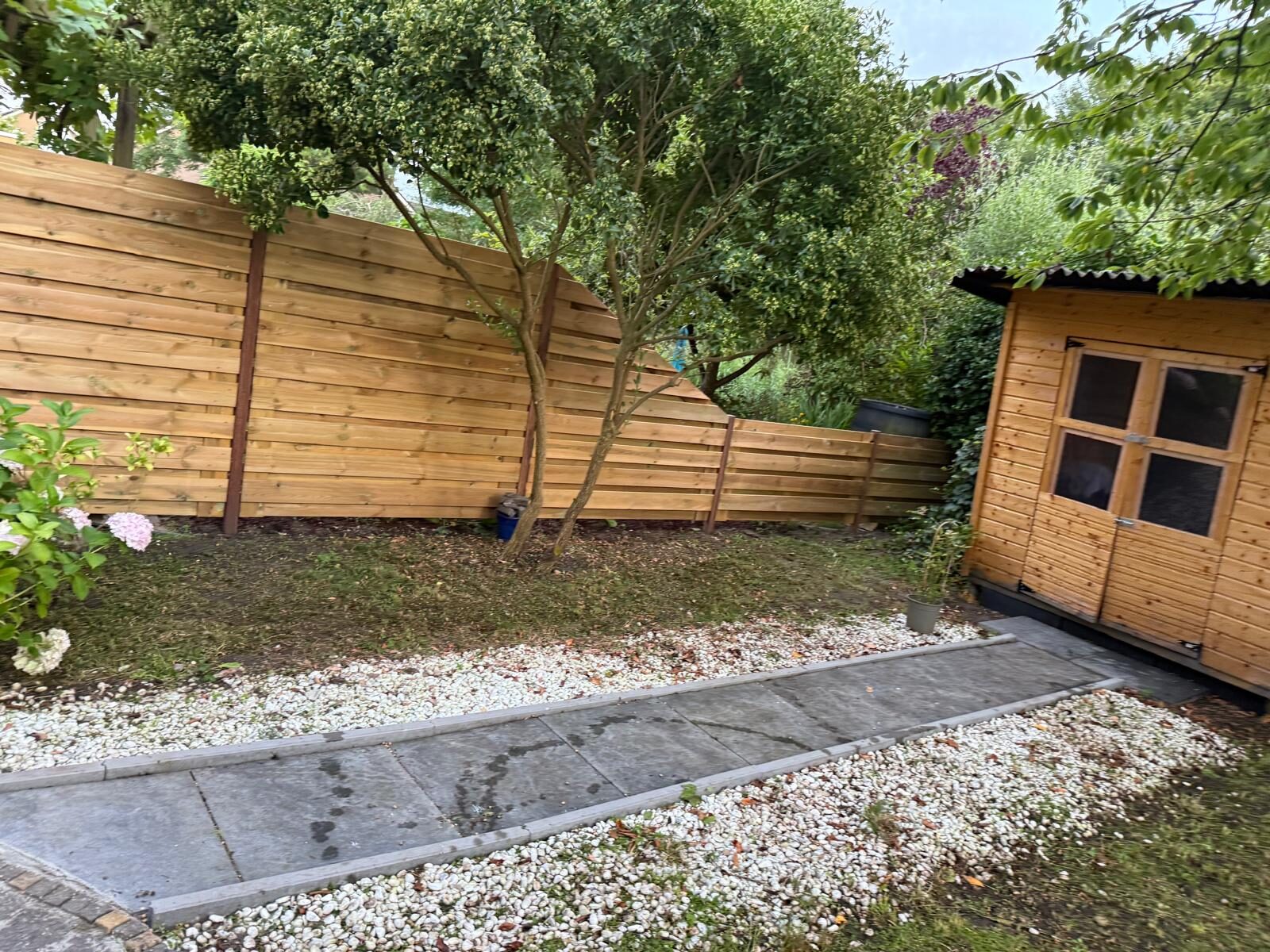
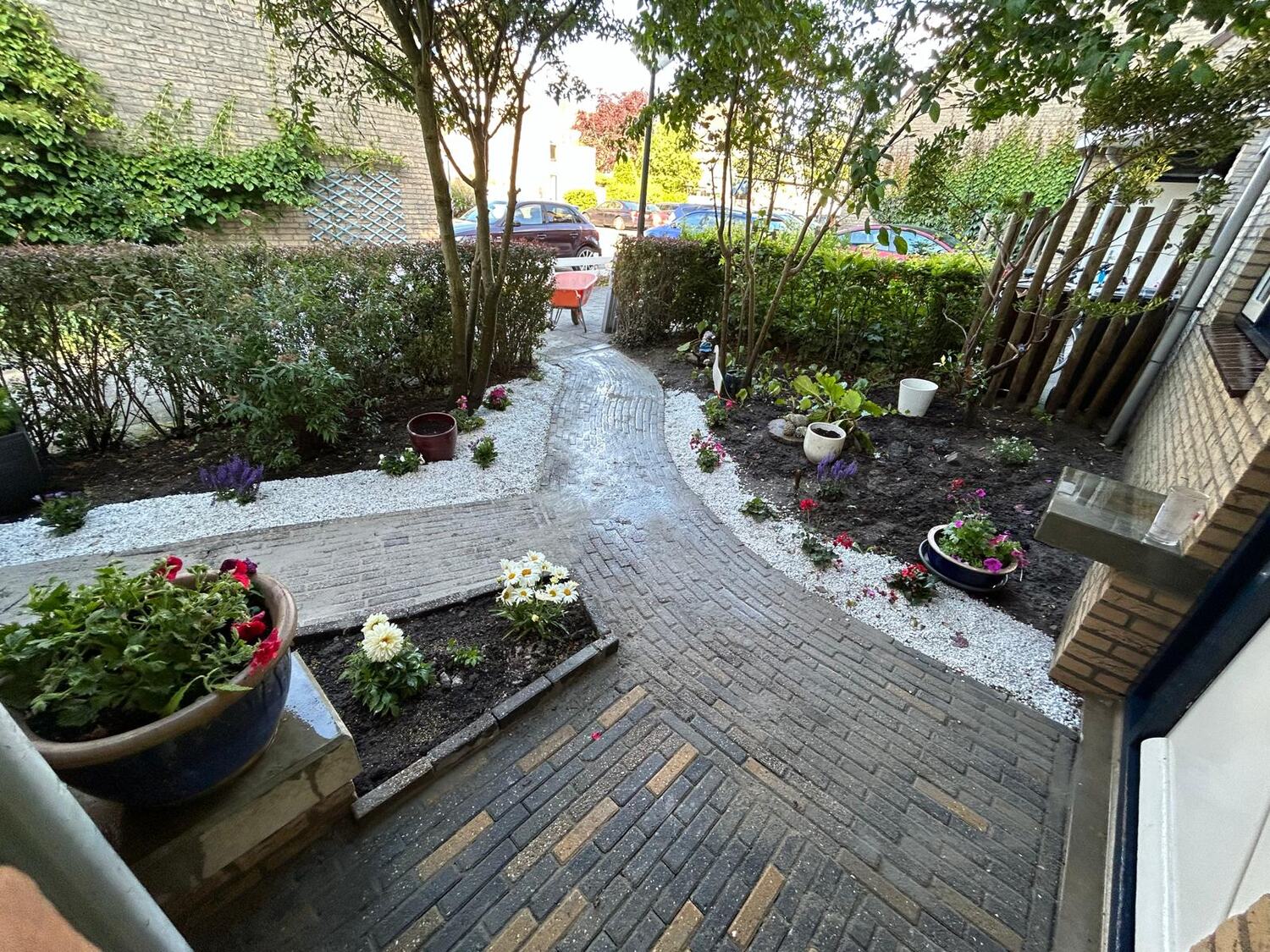
The proof is in and around the house.
Frequently asked questions
Why do you not give a price per metre for a fence?
Because a price per metre pretends every metre is the same, and it is not. The corners, the end posts, the join onto a wall and the change in level in your garden all cost more than a straight metre in the middle. A short fence with three corners can work out dearer per metre than a long straight one. So I would rather price the job than the metres.
Which costs more in the years after, timber or composite?
Timber is lighter to buy and heavier to look after, composite exactly the other way round. With timber comes sanding, treating and now and then replacing a board that has warped. Composite asks for little more than cleaning, but it is heavier material and so it puts higher demands on the posts and on what sits underneath them. Which one is cheaper for you depends on how long you plan to stay and on how much appetite you have for maintenance.
Can a fence go up without concrete in the ground?
It can, and sometimes it is the right choice, for a light screen for instance or if something else in the garden is still going to change. But the less grip a post has under the ground, the sooner the fence starts to move in the wind and through a wet winter. What you save on the foundation you pay back in straightening it up. With heavy panels and with a gate, founding them properly is not a luxury item.
Does the old fence have to come out first and what does that cost?
Usually it does, and it is an item people forget as a matter of course. Pulling it down is the quickest part. The time sits in the old concrete footings or buried posts that have to come out, and in the disposal. Treated timber cannot simply go in with ordinary building waste, so that goes separately. If your garden is a long way from the street, every wheelbarrow counts.
How high may a fence stand on the boundary?
That depends on where it stands. Stricter rules apply to a screen on the street side or in the front garden than to a fence behind the house, and your council can put requirements on top of that through the planning scheme or its design rules. If you live in a flat or on a site with an owners' association, its rules come into it as well. I deliberately give no measurements here, because they differ per situation and they change. Check the Omgevingsloket and your council for your address, they have the last word.
Do I need permission from the neighbours?
If the fence stands exactly on the boundary, it belongs to both of you and so you decide together. If you put it entirely on your own ground, you can do more on your own, but you also give up a strip of garden. In both cases the smartest thing you can do is sit down beforehand: where exactly does the boundary run, who pays what, and which side gets the good face. That conversation is free and a row with the neighbours over a post is not.
Why is a gate so much dearer than a stretch of fence?
Because a gate is the only part that moves. It hangs on one side, so that post takes years of pull and has to be heavier and set deeper. On top of that come the ironmongery, the lock and the adjusting. A gate that drags over the paving after one winter is nearly always a gate that was hung on too light a post.
Have this done for you
Would you rather have this work carried out than read about it? Here is what I do exactly.